Display
- Insta360 GO 3S
- Action Pod display pixel density: 325 ppi
- DJI Osmo Nano
- Resolution: 314×556

Action camera comparison
Compare video, stabilisation, battery and durability.
01Selected 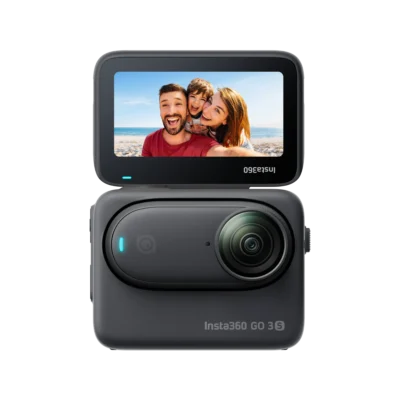 Insta360 GO 3S
KSh 44,000In Stock | 02 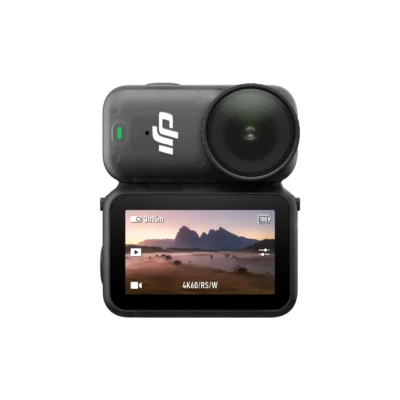 DJI Osmo Nano
KSh 46,000In Stock |
|---|
The DJI Osmo Nano has a much bigger battery (530 mAh) and a larger 1/1.3-inch sensor for cleaner low-light footage and works with a wireless microphone, while the Insta360 GO 3S has better water and dust protection (IPX8), is lighter (39.1 g) and has a larger 2.2-inch screen.
The main differences to help you choose.
| Priority | Insta360 GO 3S | DJI Osmo Nano |
|---|---|---|
| Camera | Camera type: Mini / wearable action camera | Camera type: Mini / wearable action camera |
| Display | 2.2-inch display, 325 ppi | 1.96-inch display, 326 ppi |
| Battery life | 310 mAh battery | 530 mAh battery |
| Storage | Up to 128 GB storage | Up to 128 GB storage |
| Weight | 39.1 g | 52 g |
| Water resistance | IPX8 water and dust resistance | IPX4 water and dust resistance |
| Connections | Wi-Fi 5 | Wi-Fi 6 |
| Charging | GO 3S: Action Pod Action Pod: Type-C GO 3S: 80% in 23 mins | | 30 W wired charging |
| Aperture | F2.8 | F/2.8 |
| Photo max resolution | 4000x2250 (16:9), 2880×2880 (1:1) | 6880 × 5160 |
| Stabilization | FlowState stabilization | EIS:, rockSteady 3.0 |
| Audio format | 48 kHz, 24bits, AAC | 48 kHz 16-bit, AAC |
| USB | Type-C USB2.0 | USB-C |
| Shutter speed | Photo: 1/8000 - 120s | Photo: 1/8000-30 s |
| Photo formats | JPG | JPEG/RAW |
| Slow motion | 2.7K at 100 fps | 4K: 4x (120fps), 2.7K: 4x (120fps) |
Tick a topic above to see how each product answers it.
Explore the full specifications, section by section.
| Specification | Insta360 GO 3S | DJI Osmo Nano |
|---|---|---|
| Brand | Insta360 | DJI |
| Model | GO 3S | Osmo Nano |
| Specification | Insta360 GO 3S | DJI Osmo Nano |
|---|---|---|
| Dimensions | GO 3S: 25.6x54.4x24.8 mm (1.0x2.1x1.0in) Action Pod: Screen Folded: 63.5x47.6x29.5mm (2.5x1.9x1.2in) Screen Unfolded: 63.5x86.6x29.9mm (2.5x3.4x1.2in) | Camera: 57.3×29.5×28 mm (L×W×H) Multifunctional Vision Dock: 59.1×42.2×22.3 mm (L×W×H) |
| Weight | GO 3S: 39.1g (1.38oz) Action Pod: 96.3g (3.40oz) | Camera: 52 g Multifunctional Vision Dock: 72 g |
| Specification | Insta360 GO 3S | DJI Osmo Nano |
|---|---|---|
| Display | Camera has no built-in screen; flip touchscreen on Action Pod | Dimensions: 1.96 inches, 326 ppi Resolution: 314×556 Maximum Brightness (typical): 800 cd/㎡ |
| Screen size | Action Pod: 2.2-inch flip touchscreen | Dimensions: 1.96 inches, 326 ppi |
| Screen resolution | Action Pod display pixel density: 325 ppi | Resolution: 314×556 |
| Screen brightness | — | Maximum Brightness (typical): 800 cd/㎡ |
| Specification | Insta360 GO 3S | DJI Osmo Nano |
|---|---|---|
| Charging | GO 3S: Action Pod Action Pod: Type-C GO 3S: 80% in 23 mins | 100% in 35 mins Action Pod: 80% in 47 mins | 100% in 65 mins | USB-C PD 3.0 fast charging; use a compatible charger rated 30 W or above |
| Specification | Insta360 GO 3S | DJI Osmo Nano |
|---|---|---|
| USB | Type-C USB2.0 | USB-C |
| Bluetooth | BLE 5.0 | Camera: BLE 5.1 Multifunctional Vision Dock: BLE 5.4 |
| Wi-Fi | 5GHz 802.11a/n/ac | Wi-Fi 6.0 802.11 a/b/g/n/ac/ax |
| Specification | Insta360 GO 3S | DJI Osmo Nano |
|---|---|---|
| Water resistance | Camera: IPX8, waterproof to 10 m; Action Pod: IPX4 splash resistance only; compatible dive case supports 60 m | Camera: up to 10 m Camera + Multifunctional Vision Dock: IPX4 splash resistance Before use, tighten the Glass Lens Cover. It is not recommended to use the camera body only for long-term underwater shooting or in environments with high water impact pressure. Do not use the camera in hot springs or extreme underwater environments, or let it come into contact with corrosive or unknown liquids. |
| Specification | Insta360 GO 3S | DJI Osmo Nano |
|---|---|---|
| Released | 13 June 2024 | 2025 |
| Camera type | Mini / wearable action camera | Mini / wearable action camera |
| Operating temperature | GO 3S: -4°F to 104°F (-20℃ to 40℃) Action Pod: -4°F to 104°F (-20℃ to 40℃) | -20° to 45° C (-4° to 113° F) |
| Specification | Insta360 GO 3S | DJI Osmo Nano |
|---|---|---|
| Sensor | Image sensor | 1/1.3″ CMOS |
| Sensor size | 1/2.3-inch | 1/1.3″ |
| Aperture | F2.8 | f/2.8 |
| 35mm equivalent focal length | 16mm | — |
| Photo max resolution | 4000x2250 (16:9) 2880×2880 (1:1) 3968x1472 (2.7:1) 4000x3000 (4:3) | 6880 × 5160 |
| Photo formats | JPG DNG (can be exported to JPG via app or Studio) | JPEG/RAW |
| Video max resolution | 4K at 30 fps | 4K at 60 fps normal video; 4K at 120 fps slow motion |
| Video modes / frame rates | Video 4K: 3840x2160@24/25/30fps 2.7K: 2720x1536@24/25/30fps, 2752x1530@50fps 1080p: 1920x1080@24/25/30/50fps FreeFrame Video 4K: 3840x2880@24/25/30fps 2.7K: 2720x2040@24/25/30/50fps 1080p: 1920x1440@24/25/30/50fps Timelapse 4K: 4000x3000@30fps (Export using Insta360 Studio for optimal quality.) TimeShift 4K: 4000x3000@30fps (Export using Insta360 Studio for optimal quality.) 2.7K: 2720x2040@30fps Slow Motion 2.7K: 2720x1530@100fps 1080p: 1920x1080@120/200fps Pre-Recording 4K: 3840x2160@24/25/30fps 2.7K: 2720x1536@24/25/30fps, 2752x1530@50fps 1080p: 1920x1080@24/25/30/50fps Loop Recording 4K: 3840x2160@24/25/30fps 2.7K: 2720x1536@24/25/30fps, 2752x1530@50fps 1080p: 1920x1080@24/25/30/50fps | 4K (4:3): 3840 × 2880@24/25/30/48/50fps 4K (16:9): 3840 × 2160@24/25/30/48/50/60fps 2.7K (4:3): 2688 × 2016@24/25/30/48/50/60fps 2.7K (16:9): 2688 × 1512@24/25/30/48/50/60fps 1080p (4:3): 1920 × 1440@24/25/30/48/50/60fps 1080p (16:9): 1920 × 1080@24/25/30/48/50/60fps |
| Slow motion | 2.7K at 100 fps; 1080p at 120 / 200 fps | 4K: 4x (120fps) 2.7K: 4x (120fps) 1080p: 8x (240fps), 4x (120fps) |
| Video formats / codecs | MP4; H.264 | MP4 (HEVC) |
| Color profiles / HDR | Standard, Vivid, Flat, Portrait | D-Log M; high-dynamic-range video without a separate HDR mode |
| Stabilization | FlowState stabilization | EIS: RockSteady 3.0 HorizonBalancing EIS is not supported in Slow Motion and Timelapse modes. HorizonBalancing is only available when the video resolution is 1080p (16:9), 2.7K (16:9), or 4K (16:9) with a frame rate of 60fps or below. |
| Horizon leveling / lock | 360° Horizon Lock via FreeFrame export | EIS: RockSteady 3.0 HorizonBalancing EIS is not supported in Slow Motion and Timelapse modes. HorizonBalancing is only available when the video resolution is 1080p (16:9), 2.7K (16:9), or 4K (16:9) with a frame rate of 60fps or below. |
| Shooting modes | Video: Video, FreeFrame Video, Timelapse, TimeShift, Slow Motion, Pre-Recording, Loop Recording, Interval Video Photo: Photo, HDR Photo, Interval Photo, Starlapse | Standard video; Photo; Slow Motion; Hyperlapse; Timelapse; Pre-Rec |
| Megapixels | — | 35 MP |
| Lens | — | FOV: 143° Aperture: f/2.8 Focus Range: 0.35 m to ∞ |
| Field of view (FOV) | — | 143° |
| Dynamic range | — | Up to 13.5 stops under manufacturer test conditions |
| Specification | Insta360 GO 3S | DJI Osmo Nano |
|---|---|---|
| Microphones | 2 | 2 |
| Audio modes | Wind Reduction, Stereo, Direction Focus | — |
| Audio format | 48 kHz, 24bits, AAC | 48 kHz 16-bit; AAC |
| Speakers | — | Playback audio via Multifunctional Vision Dock |
| External microphone support | — | DJI microphones only; direct connection to first-generation DJI Mic is unsupported |
| Specification | Insta360 GO 3S | DJI Osmo Nano |
|---|---|---|
| Operating system / platform | Insta360 camera firmware; Insta360 app and Studio | DJI camera firmware; DJI Mimo companion app |
| Internal storage | 64GB, 128GB | 64 GB version: 48 GB usable; 128 GB version: 107.6 GB usable; footage records to the camera internal storage |
| Memory card / expandable storage | No microSD slot; fixed internal storage | microSD up to 1 TB in Vision Dock for exporting footage; direct recording to microSD is unsupported |
| Specification | Insta360 GO 3S | DJI Osmo Nano |
|---|---|---|
| Battery capacity | GO 3S: 310mAh Action Pod: 1270mAh | Camera: 530 mAh Multifunctional Vision Dock: 1300 mAh |
| Battery life / runtime | GO 3S: 38 mins GO 3S + Action Pod: 140 mins *Tested in 77°F (25°C) lab conditions at 1080p@30fps Video Mode, screen and Wi-Fi off. Run time may vary in different conditions. | Camera: 90 min* Camera + Multifunctional Vision Dock: 200 min* * Tested at 25° C (77° F) room temperature while recording 1080p/24fps (16:9) video, with RockSteady stabilization enabled, Wi-Fi disabled, and the screen turned off. Actual operating time may vary based on device settings, usage, and environmental factors. Data was collected in a controlled environment and should be taken as reference only. Endurance Mode: Continuous recording at 4K/60fps for over 50 minutes** ** Measured at 25° C (77° F) room temperature with RockSteady stabilization enabled, Wi-Fi disabled, and the screen turned off. |
| Specification | Insta360 GO 3S | DJI Osmo Nano |
|---|---|---|
| Sensors | 6-axis gyroscope | — |
| Companion app / compatibility | Insta360 app (iOS / Android), Insta360 Studio (Windows / macOS); feature support depends on device and software version | DJI Mimo app |
| Mounting / accessory system | Magnetic mounting; Magnet Pendant, Easy Clip and Pivot Stand | Magnetic mounting; compatible third-party mounts via optional Dual-Direction Quick-Release Foldable Adapter |
| Colors | Arctic White, Midnight Black | — |
| Key features | — | Hyperlapse: 4K/2.7K/1080p@25/30fps: Auto/×2/×5/×10/×15/×30 Timelapse: 4K/2.7K/1080p@25/30fps Intervals: 0.5/1/2/3/4/5/6/8/10/15/20/25/30/40 s, 1/2/5/30/60 min Duration: 5/10/20/30 min, 1/2/3/5 hours, ∞ Pre-Rec: Pre-Recording Duration: 5/10/15/30 s, 1/2/5 min |
| Specification | Insta360 GO 3S | DJI Osmo Nano |
|---|---|---|
| Focus range | Minimum focus distance: 0.5 m | — |
| ISO range | 100-3200 | Photo: 100-25600; Video: 100-25600 |
| Shutter speed | Photo: 1/8000 - 120s; Video: 1/8000 - to the limit of frames per second | Photo: 1/8000-30 s; Video: 1/8000 s to the limit of frames per second |
| Exposure control / compensation | ±4EV | — |
| White balance | Auto, 2000–10000K | — |
| Specification | Insta360 GO 3S | DJI Osmo Nano |
|---|---|---|
| Maximum video bitrate | 120Mbps | 120 Mbps |
| Video codec / encoding | H.264 | — |
| Livestreaming | / | — |
| Specification | Insta360 GO 3S | DJI Osmo Nano |
|---|---|---|
| Photo modes | Photo, HDR Photo, Interval Photo, Starlapse | Single: Approx. 35 MP; Countdown: Off/0.5/1/2/3/5/10 s; Burst: Up to 30 images/3 s |
These products have the same published specifications.
Get the DJI Osmo Nano if you want a much bigger battery and a larger 1/1.3-inch sensor for cleaner low-light footage, or the Insta360 GO 3S if you would rather have better water and dust protection and a lighter build.
Back to compared products ↑Insta360 GO 3SVSGoPro Max 2Insta360 X4 8k CameraVSInsta360 GO 3SGoPro Hero 12 BlackVSInsta360 GO 3SInsta360 Ace ProVSInsta360 GO 3SInsta360 GO 3SVSGoPro Lit HeroInsta360 GO 3SVSDJI Osmo Action 4 Adventure ComboInsta360 GO 3SVSDJI Osmo Action 5 Pro Adventure ComboInsta360 GO 3SVS GoPro Hero 13Insta360 GO 3SVS
 Insta360 X4 Air 8K 360 CameraInsta360 GO 3SVS
 Insta360 GO Ultra
We are here to serve you
Keep a link to this cart, or ask us to send it to you. Reminders are optional.
You may send me reminders about this cart on the channels I select. I can opt out at any time.
Only the details you provide here or in checkout are used. Reminders are optional. Privacy notice