Weight
- Steam Deck OLED
- About 640 g
- Lenovo Legion Go S
- About 740 g

Handheld gaming pc comparison
Compare key specifications, features and design side by side.
01Selected 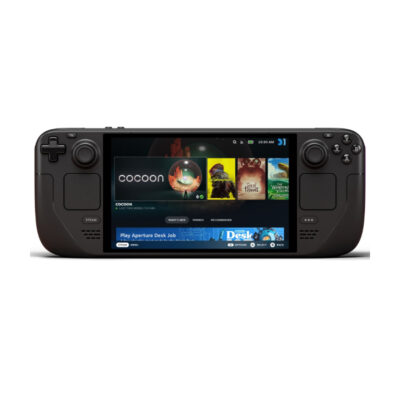 Steam Deck OLED
KSh 125,000In Stock | 02 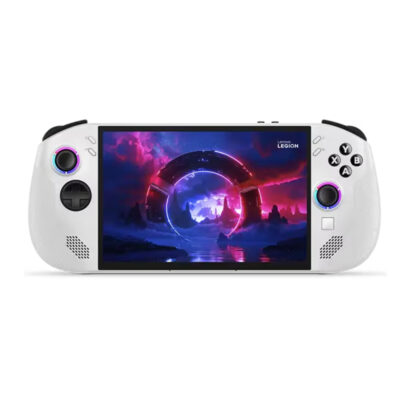 Lenovo Legion Go S
KSh 83,000Out of Stock |
|---|
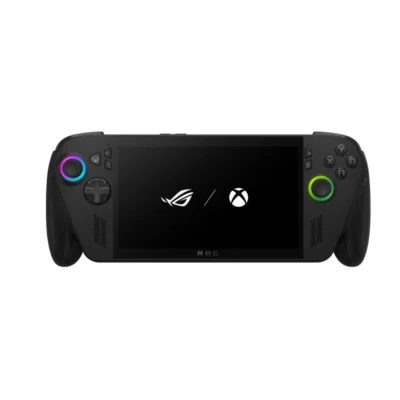
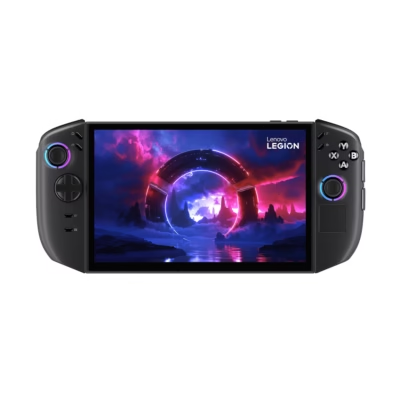
The Lenovo Legion Go S has a larger 55.5 Wh battery and a sharper screen, while the Steam Deck OLED is lighter (about 640 g).
The main differences to help you choose.
| Priority | Steam Deck OLED | Lenovo Legion Go S |
|---|---|---|
| Weight | About 640 g | About 740 g |
| Battery capacity | 50 Wh battery | 55.5 Wh battery |
| Battery life | Up to 12 hours per charge | 55.5Wh rechargeable lithium-ion battery |
| Storage expansion | UHS-I microSD slot supporting SD, SDHC and SDXC | microSD card reader |
| Power supply | USB-C PD 3.0, manufacturer-specified 45W power supply | USB-C charging |
| Integrated display | 7.4-inch HDR OLED touchscreen, 1280 × 800 | 8-inch IPS-type touchscreen, 1920 × 1200 |
| Graphics | AMD RDNA 2 GPU | Integrated AMD Radeon graphics with shared memory |
Tick a topic above to see how each product answers it.
Explore the full specifications, section by section.
| Specification | Steam Deck OLED | Lenovo Legion Go S |
|---|---|---|
| Brand | — | Lenovo |
| Model | Steam Deck OLED | Legion Go S |
| Product type | Handheld gaming PC | Handheld gaming PC |
| Specification | Steam Deck OLED | Lenovo Legion Go S |
|---|---|---|
| Dimensions | 298 × 117 × 49 mm | 298.5 × 127.55 × 22.6–43.4 mm; manufacturer measurements can vary by configuration |
| Weight | Approximately 640 g | Around 740 g; manufacturer estimate varies by configuration |
| Specification | Steam Deck OLED | Lenovo Legion Go S |
|---|---|---|
| Processor | 6nm AMD APU; Zen 2 CPU, four cores/eight threads, 2.4–3.5GHz | — |
| Graphics | AMD RDNA 2 GPU; eight compute units at 1.6GHz, 1.6 TFLOPS FP32 | Integrated AMD Radeon graphics with shared memory |
| Storage expansion | UHS-I microSD slot supporting SD, SDHC and SDXC | microSD card reader |
| Specification | Steam Deck OLED | Lenovo Legion Go S |
|---|---|---|
| Memory | 16GB onboard LPDDR5 RAM; 6400MT/s | — |
| Internal storage | 1TB, 512GB | 1TB, 512GB |
| Specification | Steam Deck OLED | Lenovo Legion Go S |
|---|---|---|
| Battery and runtime | 50Wh battery; manufacturer estimate of 3–12 hours of gameplay, depending on use | 55.5Wh rechargeable lithium-ion battery; runtime depends on the processor/configuration and use |
| Specification | Steam Deck OLED | Lenovo Legion Go S |
|---|---|---|
| System software | SteamOS 3, based on Arch Linux; KDE Plasma desktop | — |
| Specification | Steam Deck OLED | Lenovo Legion Go S |
|---|---|---|
| Video output and refresh rate | DisplayPort over USB-C; manufacturer maximum up to 8K at 60Hz or 4K at 120Hz with compatible equipment | — |
| Integrated display | 7.4-inch HDR OLED touchscreen; 1280 × 800; up to 90Hz; 1000-nit HDR peak and 600-nit SDR brightness | 8-inch IPS-type touchscreen; 1920 × 1200; 48–120Hz variable refresh; 500-nit brightness; 100% sRGB; ten-point touch |
| Ports | USB-C with USB 3 Gen 2 and DisplayPort; 3.5mm headphone/headset jack; microSD slot | — |
| Wi-Fi and Bluetooth | Tri-band 2×2 Wi-Fi 6E; Bluetooth 5.3 | Wi-Fi 6E 802.11ax 2×2; Bluetooth 5.3 |
| Specification | Steam Deck OLED | Lenovo Legion Go S |
|---|---|---|
| Controller support | Integrated sticks, D-pad, triggers, bumpers, four assignable grip buttons, two haptic trackpads and six-axis IMU | Integrated sticks, D-pad, ABXY buttons, triggers, bumpers, Y1/Y2 buttons and touchpad |
| Power supply | USB-C PD 3.0; manufacturer-specified 45W power supply | USB-C charging; regional configurations may include a 65W USB-C PD 3.0 adapter or no adapter |
These products have the same published specifications.
For most buyers the Lenovo Legion Go S is the better buy; the Steam Deck OLED makes sense if you want a lighter build.
Back to compared products ↑We are here to serve you
Keep a link to this cart, or ask us to send it to you. Reminders are optional.
You may send me reminders about this cart on the channels I select. I can opt out at any time.
Only the details you provide here or in checkout are used. Reminders are optional. Privacy notice