Product details
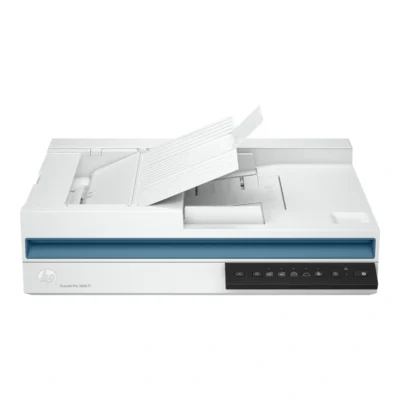
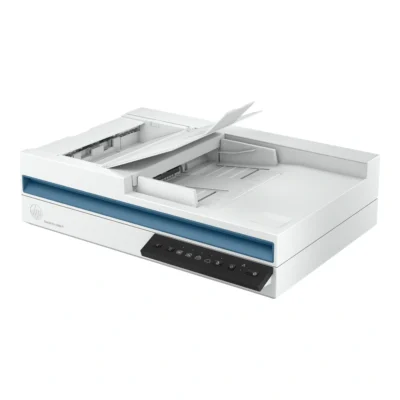
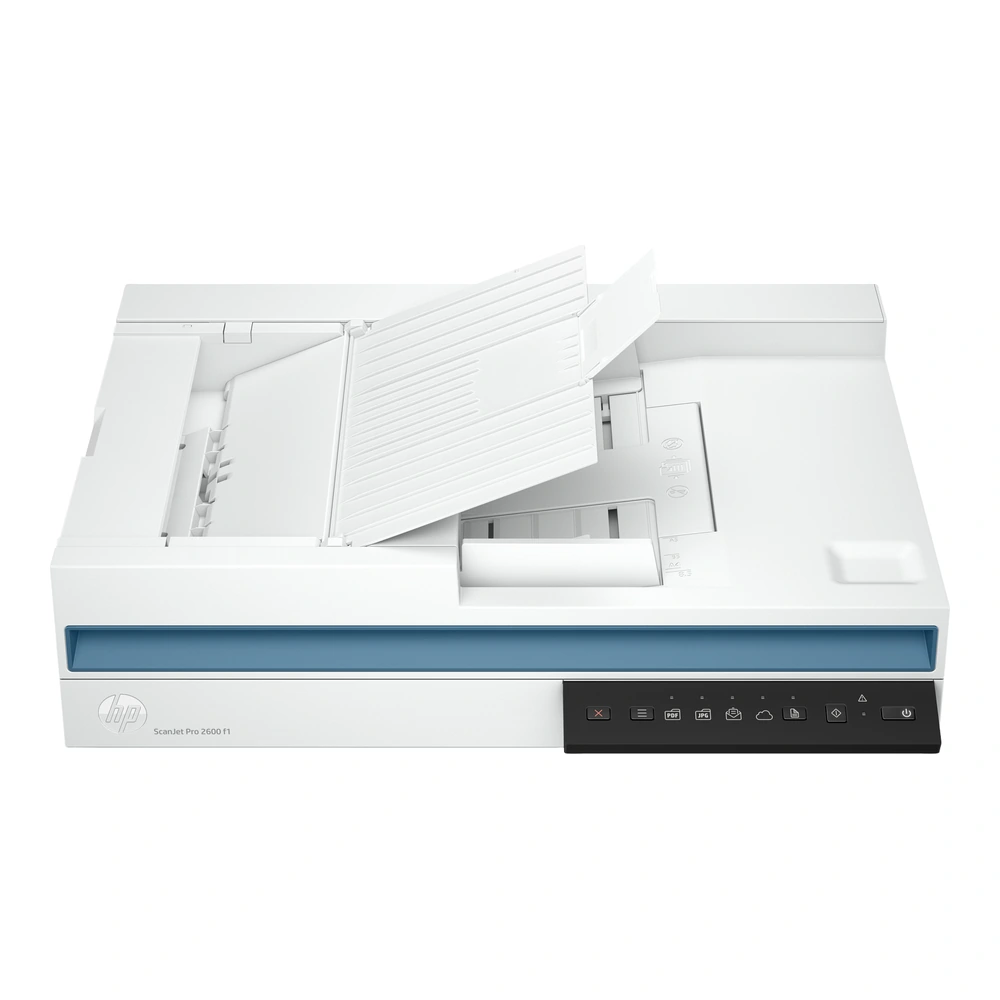
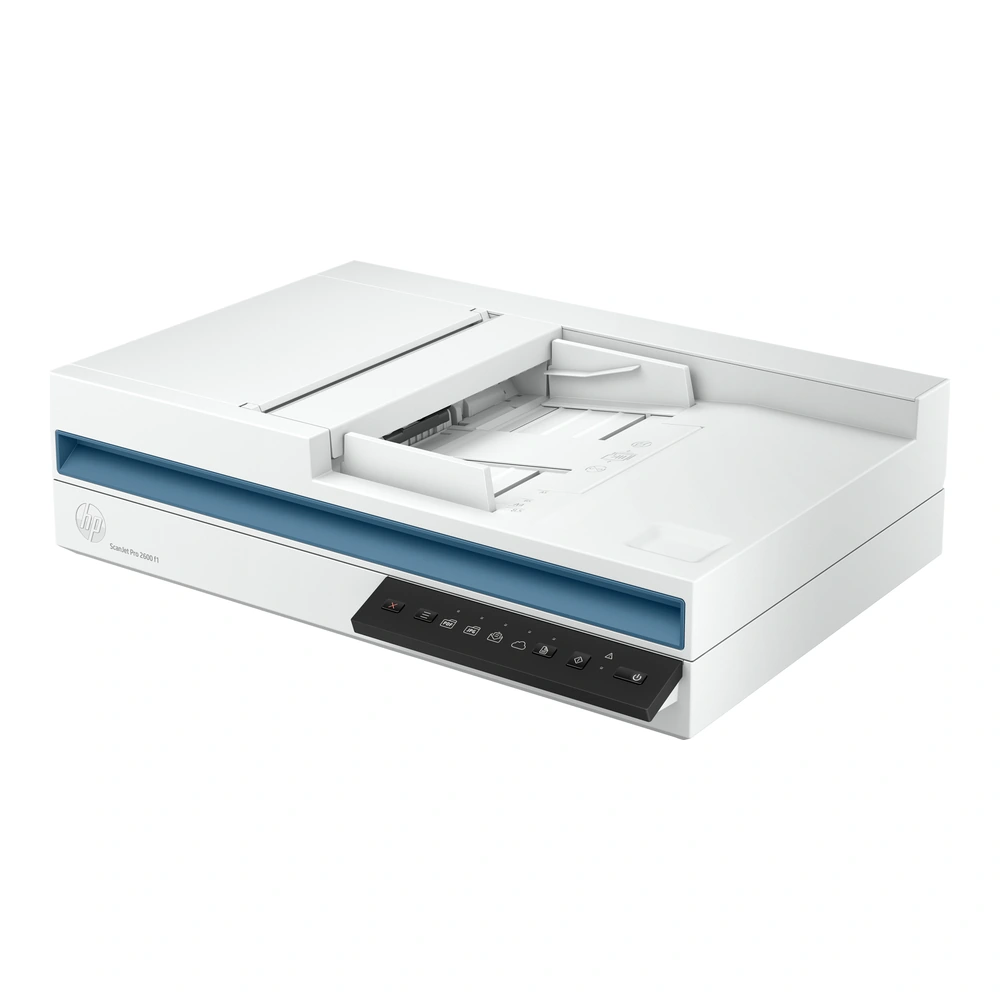
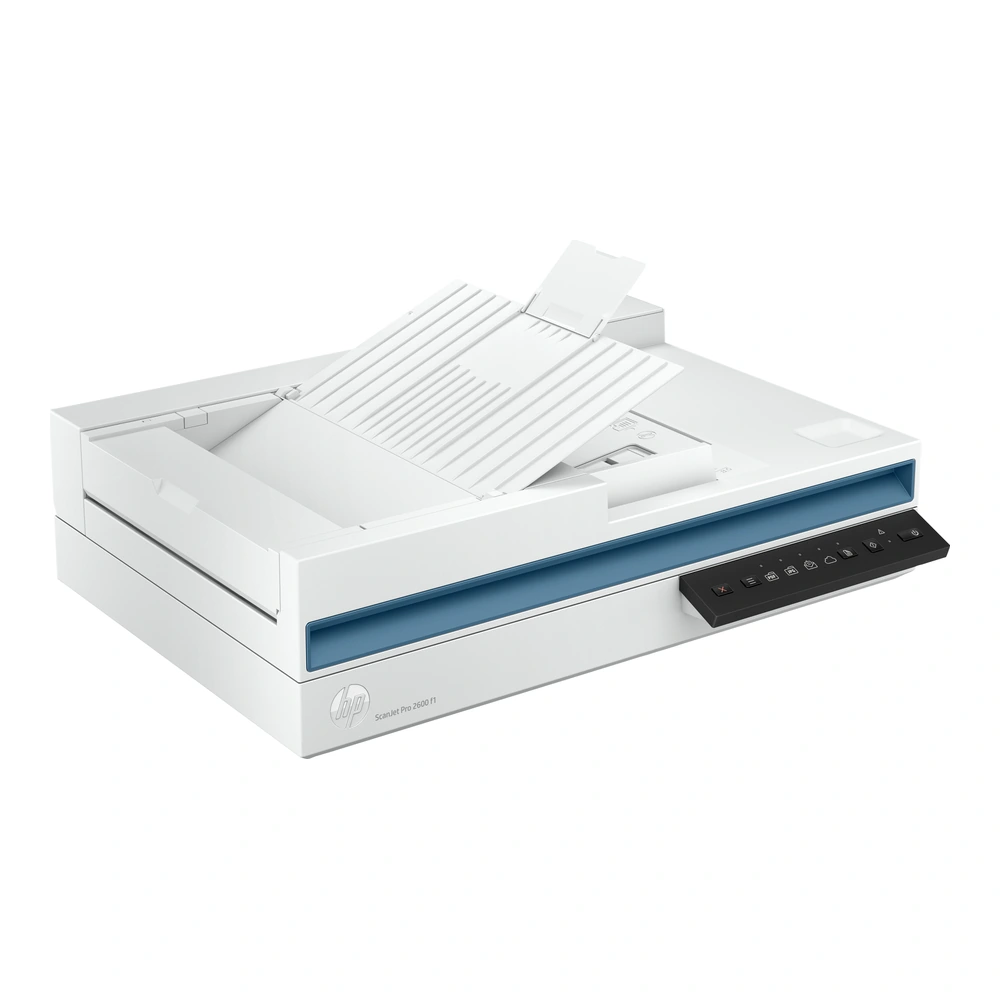
The HP ScanJet Pro 2600 f1 combines a flatbed scanner with a 60-sheet automatic document feeder. It supports single-pass two-sided scanning for loose originals, alongside flatbed capture for photos, bound material and individual documents.
Scanning and document handling
The document feeder captures both sides in a single pass, producing up to 25 ppm/50 ipm (b&w, gray and color, 300 dpi). The speed rating is measured at 300 dpi for black-and-white, grayscale and colour documents. Use the flatbed for material that needs careful positioning on the glass, and the feeder for batches of suitable loose sheets. The ADF accepts supported paper formats including A4, A5, A6, Letter and Legal.
Resolution and output
Hardware scan resolution is up to 600 x 600 dpi (color and mono, adf); up to 1200 x 1200 dpi (color and mono, flatbed). Colour handling uses 24-bit (external), 48-bit (internal); 256 grayscale levels. Select a resolution that suits the purpose of the scan, from routine document filing to capturing finer detail on the flatbed. The supported output formats include searchable PDF, standard PDF, JPEG, PNG, TIFF, text and Office document formats through the supplied scanning software.
Computer connection and controls
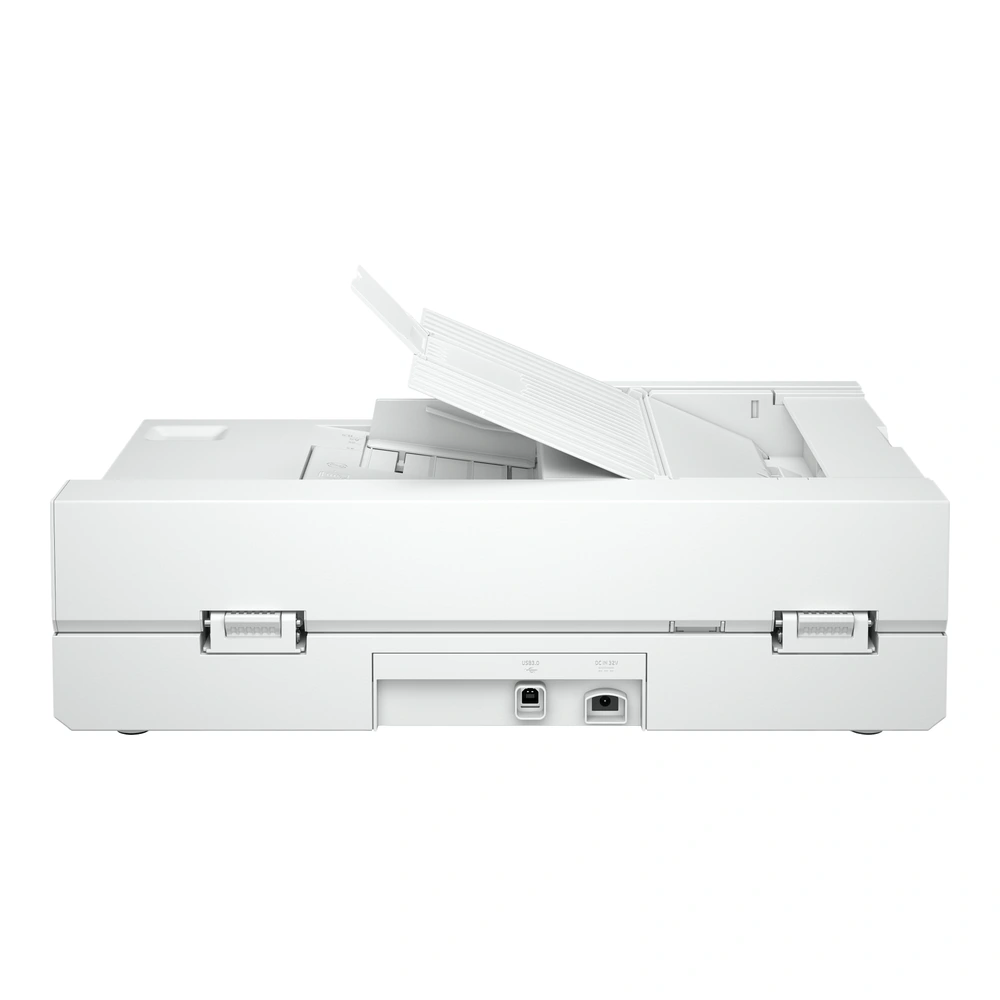
A USB 2.0 connection links the scanner to a compatible computer. HP scanning software provides configurable shortcuts, optical character recognition, automatic colour detection and document processing tools. The front panel has dedicated controls for power, scanning, duplex mode, shortcut selection and cancellation. Install the appropriate driver and software for the intended operating system before starting a scanning workflow.
Workspace and daily use
The closed scanner measures 491.5 x 325.4 x 133.3 mm and weighs 5.4 kg. Leave additional space for the raised lid, feeder and paper path. Recommended daily duty cycle: 1500 pages (ADF). The package includes the scanner, USB cable, external power adapter, power cords and installation documentation. The 2600 f1 provides feeder and flatbed scanning without a multifeed detection sensor.